Instagram vs Plinfy: why independent professionals use both
Instagram vs Plinfy for independent professionals: what each channel delivers, where Instagram stops, and why a website and Instagram work better together.
Last updated: August 14, 2026
Instagram vs Plinfy is a comparison independent professionals make when they have followers, receive engagement, and wonder whether a website would bring a different result. Instagram's organic engagement rate fell to 0.45% in 2026, according to Socialinsider. For a psychologist with 5,000 followers, that means fewer than 23 people see each post organically, without paid promotion.
Summary: Instagram organic engagement fell to 0.45% in 2026 (Socialinsider). Websites convert visitors at 2% to 11%; social networks at 0.5% to 1% (Invesp, 2024). This article compares what Instagram and Plinfy deliver differently, where each channel converts better, and why professionals who use both together have an advantage over those who depend on a single channel.
What Instagram does well and where it stops
Instagram is a discovery and audience-building tool inside social networks. For a psychologist who wants to show a therapeutic approach, build trust with mental health content, and generate recognition in the niche, Instagram works. That is what it was created for. The problem appears in two places. First, conversion: websites convert visitors at 2% to 11%, according to Invesp (2024). Instagram converts at 0.5% to 1%. A psychologist with 500 monthly visitors on the website can generate between 10 and 55 qualified contacts. The same volume of views on Instagram generates between 2 and 5. Second, Google: Instagram does not appear when someone searches "anxiety specialist psychologist in [city]". Who appears is whoever has an indexed website. A follower who already knows the professional can find them on Instagram, but a client who does not know them yet will not find them there.
How Plinfy solves what Instagram cannot reach
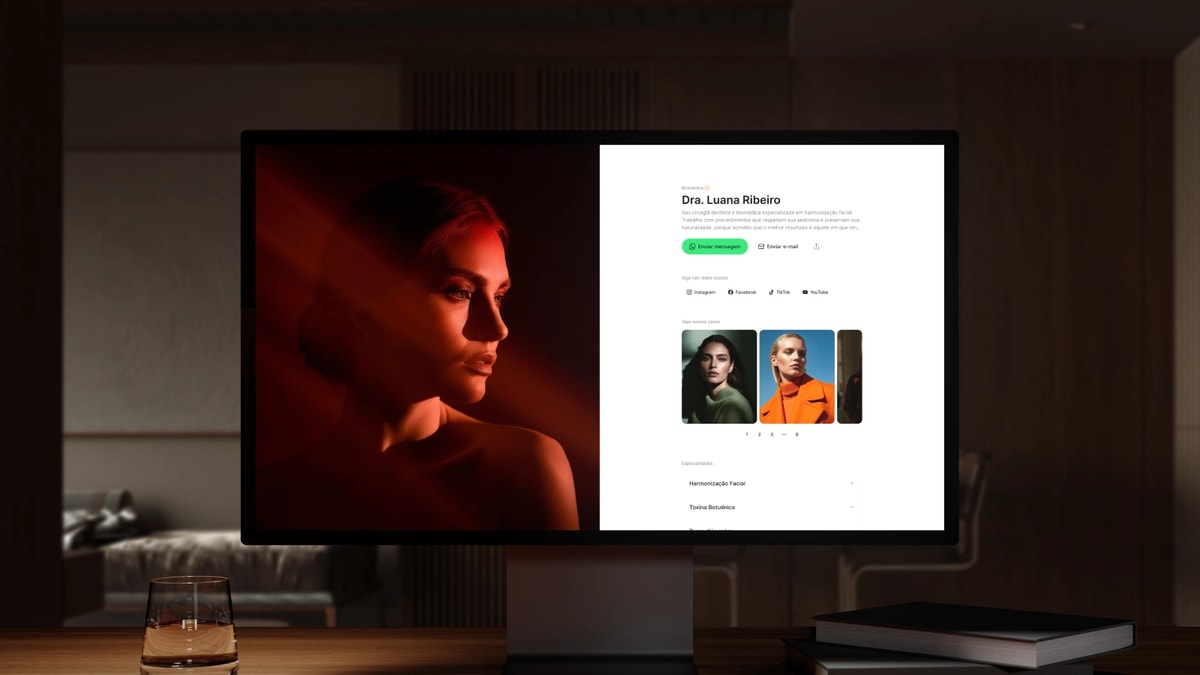
Instagram and Plinfy do not compete for the same space. Instagram operates in the feed of people who already follow. Plinfy operates on Google, where the search has intent to hire. Plinfy AI automatically generates a website with the right structure for the profession and the practice areas provided at signup. A psychologist starts with sections for therapeutic approach, specialties, reviews, and a contact form, already organized. The professional does not start from a blank page: they already have an organization designed to convert Google visitors into qualified contacts. A Plinfy website also works as the destination of the Instagram link in bio. Instead of a simple links page or a direct link to WhatsApp, the follower arrives at a complete website with specialties described, visible reviews, and direct contact. The two channels start working together. To see how psychologists and other health professionals structure this presence, the gallery at plinfy.com/inspiracao shows real examples by segment. To understand with more data how each channel converts differently, the article Professional website vs Instagram: what each channel delivers covers the full comparison with conversion data by channel. Create your website on Plinfy and build the foundation of your digital presence, with a free 7-day trial and full access to the Max plan, no credit card required.
Instagram vs Plinfy: a direct comparison
| Criterion | Plinfy | |
| Appears on Google | ❌ Rarely | ✅ Yes |
| Organic engagement | ⚠️ 0.45% in 2026 | ❎ Not applicable |
| Conversion rate | ⚠️ 0.5% to 1% | ✅ 2% to 11% |
| Algorithm control | ❌ None | ✅ Full |
| Monthly cost | ✅ Free | ✅ R$0 to R$99 |
| Automatic indexing | ❌ No | ✅ Yes |
| Profession-specific structure | ❌ No | ✅ Automatically generated by Plinfy AI |
Who each option is for
A discovery and audience-building channel. It works well for professionals who produce content regularly and want to build authority in their niche over time.
Plinfy
Independent professionals, freelancers, influencers, and creators who want a professional website indexed on Google, with a structure designed for their profession from signup and an acquisition channel independent of social algorithms.
Together
The combination with the highest return. Instagram attracts followers. The website captures people who search on Google. The Instagram link in bio points to the website, converting the traffic that already arrives from social networks more effectively.
What to expect for a professional who adds a website to Instagram
For a psychologist with 5,000 followers who charges R$180 per session and wants to reduce dependence on the algorithm: With a website indexed on Google and 200 monthly visitors from searches like "anxiety psychologist [city]", a 2% conversion rate represents 4 qualified contacts per month. Closing 2 of those represents R$360 per month in new revenue, from a channel that does not depend on posting frequency or social engagement. At the same time, the Instagram link in bio, which previously pointed directly to WhatsApp, now points to the complete website. The follower who clicks arrives at a page with the therapeutic approach described, patient reviews, and a contact form. Conversion of Instagram traffic also increases. Agency development for comparison: ranges from R$5,000 to R$50,000, with recurring hosting costs between R$100 and R$500 per month and maintenance between R$500 and R$2,000 per month. Plinfy delivers an indexed professional website starting at R$49 per month, with advanced SEO on paid plans. Materials from Plinfy Academy cover how to set up a Google Maps and Google Business Profile listing to complement the website.
Frequently asked questions about Instagram vs Plinfy
Instagram or a professional website: where to start?
It depends on the goal. To build an audience and recognition in the niche, Instagram is the starting point. To attract clients who actively search on Google, the website is the right channel. For most independent professionals, the two together deliver more than either one alone. Instagram's engagement rate fell to 0.45% in 2026 (Socialinsider), which makes a website an increasingly relevant complement.
Does a Plinfy website replace Instagram?
No. The two channels serve different intents. Instagram attracts people browsing social networks. A Plinfy website captures people searching on Google with intent to hire. Professionals who use both have more touchpoints with potential clients without depending exclusively on either one.
How many followers do I need for a website to make a difference?
Follower count is not the relevant criterion. What determines whether the website will make a difference is the client's search intent. Clients who search "psychologist in [city]" on Google do not arrive via Instagram, regardless of how many followers the professional has. Websites convert between 2% and 11% of visitors (Invesp, 2024) precisely because that traffic arrives with purchase intent already formed.
Does Instagram appear on Google?
Not in a meaningful way for local service searches. An Instagram profile may appear in searches for the professional's name, but not in searches for service and city such as "weight loss nutritionist [city]". For those searches, who appears is whoever has an indexed website with content about specialty and location.
Try Plinfy free for 7 days with full access to the unlimited Max plan, exclusive sections, and more. No credit card required. Paid plans starting at R$49 per month:
Create my website now