Do I really need a website?
75% of clients judge credibility by the website before hiring. Learn how independent professionals combine social media and a website to attract more clients.
Last updated: August 14, 2026
Yes, especially if you serve clients who search for services on Google. Social media builds relationships, but 68% of service hires start with search (BrightEdge, 2024). A professional website puts you in that search. This article shows when a website makes a real difference and how to combine both channels.
Summary: Having a website doesn't replace social media, it complements it. Websites show up on Google, convey credibility, and convert visitors into contacts. 75% of people judge professionals by website design (Stanford, 2023). This article covers data, examples by profession, and how to get started without technical complexity.
What the data says about professional credibility
Here's a fact most professionals don't know: Stanford Web Credibility researchers found that 75% of people judge a professional's credibility based on website design. Not likes, not followers — the website. That judgment happens in 0.05 seconds (fifty milliseconds), before they even read about your qualifications or experience. Additionally, a Verisign study indicates that 85% of consumers consider companies with their own website more trustworthy than those with social media only. Anyone with a website walks into that conversation with a credibility step already taken, especially in fields where that weighs on the hiring decision, such as healthcare, aesthetics, law, and finance.
Social media is excellent, but it has natural limitations
Instagram, TikTok, Facebook, and LinkedIn are valuable tools for building relationships, showing behind-the-scenes content, and creating engagement. Many professionals have genuine success with them. However, these platforms come with some important considerations: Limited organic reach: Instagram's average engagement rate in 2025 is 0.45%, according to Socialinsider. That means that out of every 1,000 followers, only 4-5 see your posts organically. Algorithm dependence: reach is determined by systems that change frequently and prioritize entertainment content over professional services. Intentional search: when someone searches "dentist in [your city]" on Google (68% of online experiences start with search, according to BrightEdge), social media profiles rarely appear in the results. That doesn't make social media bad, just limited for anyone who depends on being found by people already actively looking for specific services. The next section shows what changes when you add a website to that equation.
What changes with a professional website
Websites offer something social media can't: full control over the experience and visibility in intentional searches. Focused conversion: according to Invesp research, websites convert visitors into clients at an average rate of 2.35%, with the top 10% of sites reaching 11%+ conversion. On social media, you're constantly competing with notifications, competitors' stories, and other content. Speed matters: sites that load in under 3 seconds keep 47% more visitors engaged, according to Sweor data. You control that factor completely. Full ownership: unlike platforms where algorithms and policies change without notice, your website is a digital asset you control entirely. Consider the example of a psychologist who charges R$250 per session. If a well-optimized website attracts just 2 additional patients per month who wouldn't come from social media alone, that's R$6,000/year in incremental revenue, a significant return on the investment in a complete digital presence. Create your professional website with Plinfy: try the platform free in its most complete version for 7 days, no credit card required.
What successful professionals do differently
Professionals who grow consistently don't rely on a single channel. They build integrated digital ecosystems. The architect who uses Instagram to engage shares renders and behind-the-scenes content, but directs interested people to their website, where they present a complete portfolio, a detailed work process, and a quote form. Result: a conversion rate 4x higher than competitors who try to close projects via DMs. The nutritionist who posts tips on TikTok attracts the curious, but converts followers into patients through the website, where they explain their approach, show results, and offer direct contact. While competitors lose 80% of interested people in messages they never reply to, she converts automatically. The lawyer who publishes articles on LinkedIn builds authority, but closes cases through the website, where they demonstrate specializations, case studies, and offer an initial consultation. Corporate clients don't hire through social media — they research, evaluate credibility, and then get in touch. The pattern is clear: social media attracts attention, websites convert attention into clients. It's no coincidence that more and more professionals are moving from link-in-bio to full websites, the difference in conversion and credibility is measurable.
The most effective strategy: complementarity
The question isn't "social media OR a website?", it's how to use each channel for what it does best. This combination is especially effective for professionals like architects who need to show complete visual portfolios, lawyers who convey authority through specialized articles, physical therapists who explain complex treatments in depth, nutritionists who convert followers into real patients, or dentists who present high-value procedures with institutional credibility. Social media is ideal for: building relationships and engagement, showing behind-the-scenes content and humanizing your brand, short visual educational content, and daily interaction with your audience. Professional websites are ideal for: being found in Google searches, conveying institutional credibility, explaining complex services in depth, converting visitors into appointments and contacts, and keeping full control over data and experience. Professionals who combine both strategically get the best of both worlds: the relationship-building of social media with the credibility and visibility of an optimized website.
What a website represents in concrete numbers
HubSpot reports that 81% of buyers research online before hiring services. Let's consider conservative scenarios by field:
- Nutritionist (consultation R$300): 1 extra patient per quarter via website = R$3,600/year in additional revenue.
- Dentist (average procedure R$1,500): 1 extra patient per quarter = R$18,000/year.
- Lawyer (average case R$5,000): 1 extra case every six months = R$10,000/year.
Beyond the direct value, there are relevant indirect gains. Time saved answering the same questions in DMs that could be answered on an FAQ page on the website. If you spend 30 minutes a day on that, that's 180 hours a year, equivalent to an entire month of work. Clients who find what they need before getting in touch arrive more qualified and with less friction in the decision. According to HubSpot, 44% of visitors leave profiles when contact information isn't easily accessible. Local SEO as a differentiator: a physical therapist in São Paulo competes with hundreds of professionals. Who shows up first on Google when someone searches "physical therapy for herniated disc in São Paulo"? Not whoever has the most Instagram followers, but whoever has a website optimized for that specific search.
How to get a professional website quickly and without technical complexity
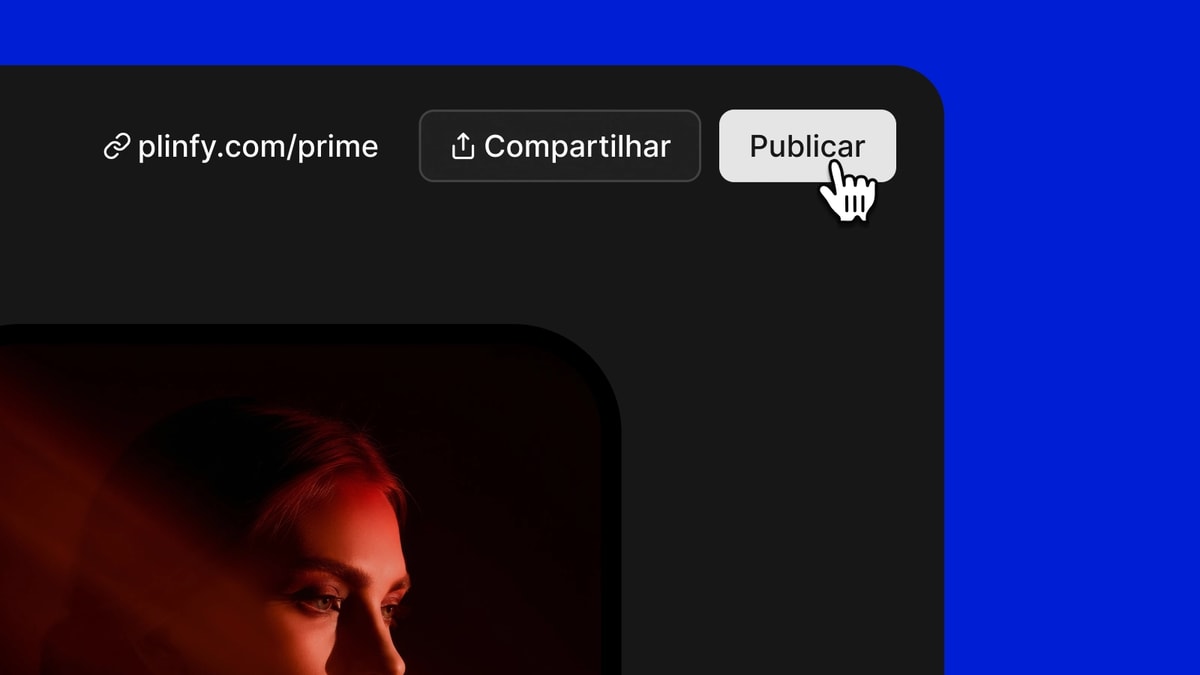
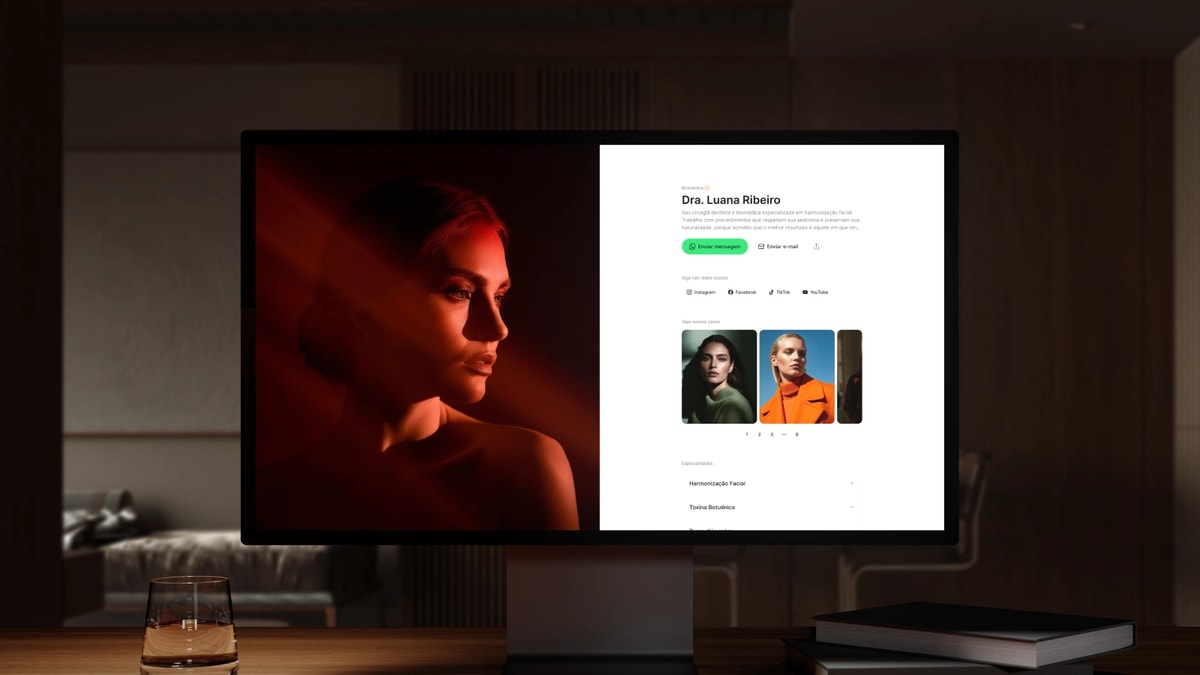
The main historical barrier to websites has always been complexity: hiring developers cost thousands of reais and took weeks or months. Plinfy is a global platform for independent professionals to create a professional website quickly and without code. At signup, it automatically generates a template based on your profession. A nutritionist starts with a template already structured to present services, approach, and contact. An architect gets a template ready for portfolio and work process. Visit our inspiration page to see some ready-made templates. Other features include built-in SEO (titles, meta descriptions, optimized URLs, and more), integration with Google Analytics, Tag Manager, Meta Pixel, and TikTok Pixel, automatic responsive design, and full autonomy to edit whenever you want, in a simple and intuitive way.
Frequently asked questions about having a professional website
Does an independent professional need a website, or is Instagram enough?
It depends on your goal. Instagram is effective for engagement and relationship-building. A website is necessary when you want to be found by people actively searching on Google, which accounts for 68% of service searches (BrightEdge, 2024). The two channels work better together than separately.
How much does a professional website cost in Brazil?
Costs vary widely. Plinfy offers a free plan to get started, plus paid plans: Pro for R$49/month and Max for R$84/month, with access to advanced features and additional functionality, including unlimited use, depending on the plan you choose. There's also a 7-day free trial where you can try every feature of the Max plan, no credit card required. Freelance designers or developers typically charge between R$2,000 and R$5,000 for a basic website, and that can exceed R$10,000, with timelines ranging from weeks to months. There are also recurring domain and hosting costs, which can range from R$100 to R$500 per month.
Can you create a professional website without knowing how to code?
Yes. Plinfy lets you create websites with no technical knowledge at all. Plinfy AI automatically generates a template based on the information you provide at signup, and then you can adjust copy, images, and other details with your real content and publish everything in a few minutes.
Does a professional website show up on Google automatically?
It depends on the platform you use to create the site. Plinfy already includes native SEO technology and automatic indexing on Google. Titles, meta descriptions, URLs, and other technical optimizations come preconfigured automatically — you just add your content. On more generic platforms, you typically need to configure SEO manually or hire a specialist at an additional cost.
Conclusion: both have their place
Social media is a powerful tool for relationships and engagement. Professional websites are essential for credibility and visibility in search. The most effective strategy isn't choosing one or the other, but using each channel for what it does best, with the website as the stable foundation of your digital presence and social media as complementary relationship channels. Professionals who combine both channels show up in more searches, arrive at every conversation with credibility already established, and convert more visitors into real contacts. The strategy doesn't require choosing one or the other, it just requires using each channel for what it does best. Start your 7-day free trial on Plinfy and have a professional website working 24/7 for you while you focus on what you do best: serving your clients.
Three questions to evaluate your current strategy
Before you decide whether you need to expand your digital presence, consider:
- When someone searches for your services on Google, do you show up? If not, you're invisible to 68% of intentional searches.
- Do new clients mention that they found you easily online? Or do you depend mainly on referrals, which, although valuable, limit growth?
- If Instagram went down for a week, how would your potential clients find you? That vulnerability has a cost.
Tip: To deepen the positioning of your professional profile, Plinfy offers free materials for download at plinfy.com/academy, including an Ultimate Guide to Building Online Authority where you'll learn the step-by-step process to create a high-performance online presence.
Sources:
- Stanford Web Credibility Research, 2023: "How Do People Evaluate a Web Site's Credibility?"
- Verisign, 2024: "Online Trust Survey"
- BrightEdge, 2024: "The Channel Report: Organic Search Drives 68% of Web Traffic"
- HubSpot, 2024: "State of Marketing Report 2024"
- Sweor, 2024: "27 Eye-Opening Website Statistics: First Impressions Matter"
- Invesp, 2024: "Conversion Rate Optimization Statistics"
- Socialinsider, 2025: "Instagram Benchmarks 2025: Key Insights and Engagement Rates"